
Split connection profile HCP 6-10MM
Please sign in so that we can notify you about a reply
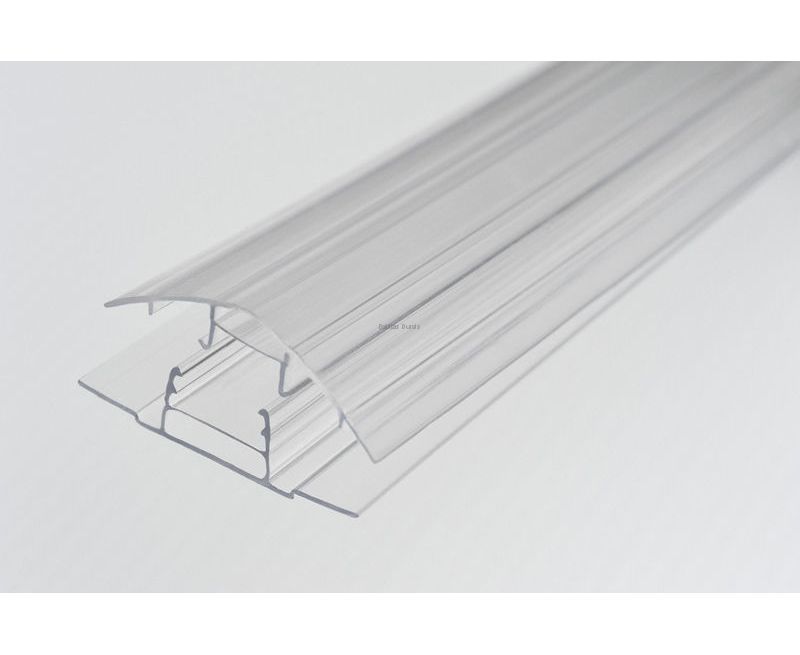
Split polycarbonate connection profile (HCP-D and HCP-U) is designed for structures made of cellular polycarbonate (light-transmitting pairs, vertical glazing, etc.). These polycarbonate profiles quickly and reliably fix the polycarbonate panel on the structural frame and at the same time connect the panels to each other.
The profile consists of two parts: the lower - base and the upper - closing cover. This profile is characterized by an excellent appearance, reliability, quick and easy installation. Split polycarbonate connection profile HCP is universal, it can be used to fasten panels of 6 mm, 8 mm and 10 mm.
The assembly is as follows: the profile base must be connected to the main longitudinal frame supports, polycarbonate panels are attached, the profile closing profile cover is placed on top and fixed in the appropriate position (lower position - 6 mm, upper 8-10 mm), the profile is fixed when you hear a click. The end cover should be fixed gradually, applying light pressure even on the surface with the palm of your hand. When connecting the profile cover and base, it is not necessary to hit them with force, use a hammer, sledgehammer or other tools.
Drill holes in the base (lower part of the profile) every 300 mm, the diameter of which should be slightly larger than the diameter of the screw (or washer leg) to be used. Secure the profile base to the structural frame with screws. Insert the edges of the panels on both sides of the base, they should rest on the base, but also leave a margin so that the panels have room to expand in hot weather (3 - 5 mm, depending on the width of the panel). Put on the end cover or upper part of the profile and, using a wooden mallet, secure it along the entire length of the profile until you hear a click. The polycarbonate profile «HCP» has grooves located at two levels: in the lower position they allow you to connect 6 mm panels, and in the upper position – 8 and 10 mm panels.
The profiles «HCP» tightly and hermetically connect the panels and secure them to the supporting supports of the main structure. At the same time, the profile also leaves room for temperature-induced changes in the polycarbonate sheets, allowing them to both expand and contract with the ambient temperature. This is the most commonly used type of profile, which can be used for all types of structures and is almost invisible in the joints and lintels of arched canopies.